Saturday, July 25, 2009

The woman in your life...very well expressed

The woman in your life.....very well expressed...


Tomorrow you may get a working woman, but you should marry her with these facts as well.

Here is a girl, who is as much educated as you are;
Who is earning almost as much as you do;

One, who has dreams and aspirations just as
you have because she is as human as you are;

One, who has never entered the kitchen in her life just like you or your
Sister haven't, as she was busy in studies and competing in a system
that gives no special concession to girls for their culinary achievements

One, who has lived and loved her parents & brothers & sisters, almost as
much as you do for 20-25 years of her life;

One, who has bravely agreed to leave behind all that, her home, people who love her, to adopt your home, your family, your ways and even your family ,name

One, who is somehow expected to be a master-chef from day #1, while you sleep oblivious to her predicament in her new circumstances, environment and that
kitchen

One, who is expected to make the tea, first thing in the morning and cook
food at the end of the day, even if she is as tired as you are, maybe more,
and yet never ever expected to complain; to be a servant, a cook, a mother,
a wife, even if she doesn't want to; and is learning just like you are as
to what you want from her; and is clumsy and sloppy at times and knows that you won't like it if she is too demanding, or if she learns faster than you;

One, who has her own set of friends, and that includes boys and even men at her workplace too, those, who she knows from school days and yet is willing to put
all that on the back-burners to avoid your irrational jealousy, unnecessary competition and your inherent insecurities;

Yes, she can drink and dance just as well as you can, but won't, simply
Because you won't like it, even though you say otherwise

One, who can be late from work once in a while whendeadlines, just like yours, are to be met;

One, who is doing her level best and wants to make this most important,
relationship in her entire life a grand success, if you just help her some
and trust her;

One, who just wants one thing from you, as you are the only one she knows in your entire house - your unstinted support, your sensitivities and most
importantly - your understanding, or love, if you may call it.

But not many guys understand this......

Please appreciate "HER"


I hope you will do....

Respect Her.

Forward this to as many women as possible... they'll love you for it!
Forward this to as many men as you can so that they'll know why women are so special

Phenomenal growth in Seva Karya all over Bharat : सेवा दिशा 2009 ( Seva Disha 2009 )


Phenomenal growth in Seva Karya all over Bharat

http://www.rssonnet.org/index.php?option=com_content&task=view&id=106

Rashtriya Seva Bharati compiles and publishes a report of Seva karya growth after every 5 years. The report is called 'Seva Disha'. Started in 1995 with the cooperation of Seva Vardhini of Pune, this report has previously been published in 1997 and 2004.

Along with Rashtriya Seva Bharati, the social service projects and institutions inspired by the organizations Vanvasi Kalyan Ashram, Vishwa Hindu Parishad, Bharat Vikas Parishad, Rashtra Sevika Samiti, Vidya Bharati, Deen dayal Shodh Sansthan, and Akhil Bharatiya Vidyarthi Parishad are also counted in this report. To collect, collate and present the ever-growing vast data of all these social service projects is a tough task and Seva Vardhini has done it in quite an appreciable way. Along with statistical data, the report presents salient features of some path breaking experiments going on in the various parts of the nation.

Seva Disha 2009, which was published on the occasion of All Bharat 'Prant Pracharak Baithak' [annual meeting of state organizers] of Rashtriya Swayamsevak Sangh, highlights some remarkable features of the growth of Social service projects. The service activities all over the nation including the remote parts of Bharat have grown by more than 1 lakh as compared to 2004. But it is not just statistical growth. The dimensions of the various projects touch almost every weaker section of the society. The 'Arogya Rakshak' [village health volunteer] scheme being run in remote villages of various states, the 'Bal Gokulam' of Kerala, the 'Char Sutri Dhan' scheme of Maharashtra, the self help groups of Tamilnadu, projects for 'street children' in Delhi and other metros, the 'education for child labour' project in Andhra, are but sample examples of the all encompassing initiative of Swayamsevaks working in social service field.


The complete report 'Seva Disha 2009' shall be published on http://rssonnet.org in near future.


A review of the ' Sangh Shiksha Varg' conducted in the last 2 months at 60 places all over Bharat was also taken at this meeting which was held in Merath on 12,13 and 14 July.. This year, 10479 Swayamsevaks from 6982 places participated as trainees in the 'Pratham Varsha' [first year] Sangh Shiksha Varg, which is a part of a three year course. 2581 Swayamsevaks participated in the 'Dwitiya Varsha' [second year training], while 973 Swayamsevaks completed the 'Trutiya Varsha' [third year] training. Every year, the Swayamsevaks who have completed the initial training of the Sangh called 'Prathamik Shiksha Varg', are eligible to participate in these 20 days residential course


देशभर के सेवाकार्यों में लक्षणीय बढो़त्री : सेवा दिशा 2009


राष्ट्रीय सेवा भारती के द्वारा देशभर में चलाये जा रहे सेवा कार्योंका एक संख्यात्मक आलेख तथा उल्लेखनीय आयामों का शब्दचित्र हर पाँच साल बाद 'सेवा दिशा' नाम से प्रकाशित होता है।पुणे स्थित सेवा वर्धिनी के सहयोग से 1995 में प्रथम बार यह संकलन एक देशव्यापी सर्वेक्षण के आधार पर प्रस्तुत किया गया था।उसके बाद 1997,2004,और अभी 2009 में प्रकाशित 'सेवा दिशा',देशभर में फैल रहे सेवाकार्यों की बढो़त्री को नापने का एक अद्भुत प्रयास रहा है। राष्ट्रीय सेवा भारती के साथ-साथ वनवासी कल्याण आश्रम,विश्व हिन्दु परिषद,भारत विकास परिषद,राष्ट्र सेविका समिति,विद्या भारती,दीनदयाल शोध संस्थान,अखिल भारतीय विद्यार्थी परिषद इन संगठनों के द्वारा प्रेरित अलग-अलग सेवा संस्थाओं के सेवा कार्यों को भी इस में संकलित किया जाता है।
दिनांक 12, 13, 14 जुलाई को मेरठ में सम्पन्न हुई राष्ट्रीय स्वयंसेवक संघ की प्रांत प्रचारकों की अखिल भारतीय बैठक में सेवा दिशा 2009 का प्रकाशन किया गया। सेवा दिशा 2009 में प्रकाशित तथ्य यह दर्शाते हैं की देश के सभी प्रांतों में और दुर्गम क्षेत्रों में,निस्वार्थ भाव से कार्य कर रहें स्वयंसेवकों ने और उनके द्वारा निर्मित स्वयंसेवी संस्थाओं ने सेवाकार्यों के माध्यम से समाज परिवर्तन के लिये एक सशक्त पहल की है।


graph


इन सबके द्वारा चलाये गये सेवा के उपक्रमों में 2004 से 2009 तक 1 लाख से भी अधिक कार्यों की वॄद्धी हुई है।


eka;


एकल विद्यालय


ये केवल संख्यात्मक वॄद्धि नहीं है। ग्राम आरोग्य के लिए आरोग्य रक्षक योजना,एकल विद्यालयों का शैक्षिक प्रयोग,केरल में चल रहे बाल गोकुलम् की अद्भुत संस्कार क्षमता,महाराष्ट्र में और गुजरात में चल रहा चार सूत्री धान खेती का प्रसार,तामिलनाडु में महिलाओं के स्वयं सहायता समूह,दीप पूजा का कार्यक्रम,व्यसन मुक्ती,दिल्ली में तथा और कुछ शहरों में सड़क पर रहने वाले बच्चों के लिए चलने वाले प्रकल्प,बंगलोर और पुणे में चल रहा युवाओं को सेवा कार्य के लिए प्रेरित करने वाला युवा फॉर सेवा उपक्रम,आंध्र का बाल मजदुरों के लिए शिक्षा का प्रकल्प,


char sutri


चार सूत्री धान खेती

ये सभी यही दर्शातें है की सेवा कार्य के आयाम भी बढ़ रहे हैं,अधिक सर्वस्पर्शी हो रहे हैं,तथा उपेक्षित समाज की समस्याओं का जड़ से समाधान करने की दिशा में अग्रसर हो रहे है


table


संपूर्ण सेवा दिशा 2009 आगामी कुछ ही दिनों में http://rssonnet.org इस वेबसाइट पर उपलब्ध होगी।

इस बैठक में किये गए वृत्त संकलन के अनुसार पूरे देश में शहर और गाँव मिलाकर 6982 स्थानों से 10479 तरूणों ने इस बार संघ के प्रथम वर्ष की शिक्षा ग्रहण की। द्वितीय वर्ष में 2581 तथा तृतीय वर्ष में 923 स्वयंसेवकों को प्रशिक्षित किया गया। शिक्षार्थियों को शाखा संचालन और शारीरिक कौशल्य के अतिरिक्त ग्राम विकास, आपदा प्रबंधन, नगरी सेवा बस्तियों में सेवा उपक्रम ऐसे विषयों में भी प्रशिक्षित किया गया। प्रतिवर्ष चलने वाले 20 दिन के इन निवासी वर्गों में, संघ की प्राथमिक शिक्षा ग्रहण किये हुए स्वयंसेवकों में से चुने हुए स्वयंसेवकों को प्रवेश दिया जाता हैं। मई के प्रारंभ से लेकर जून के अन्त तक चलने वाले यह वर्ग संघ के कार्यकर्ता प्रशिक्षण की एक महत्त्वपूर्ण कड़ी है।


इस बैठक में आगामी विजयादशमी से प्रारंभ होने वाली विश्व मंगल गो ग्राम यात्रा को सफल बनाने हेतू आवश्यक सहयोग की दृष्टि से भी चर्चा की गयी। आगामी 30 सितम्बर को कुरुक्षेत्र से इस यात्रा का शुभारंभ पूज्य संत बाबा रामदेव जी की उपस्थिति में होगा।


Friday, July 24, 2009

SPIRITUAL ANALYSIS OF "NAMASKAR"


What is the meaning and the benefits of 'Namas kar'?


Origin and the meaning of the word 'Namaskar'

The word 'Namaskar' is derived from the root 'namaha', which means paying obeisance (Namaskar) or salutation.


Frome Science of Justice - 'Namaha' is a physical action expressing that 'you are superior to me in all qualities and in every way'.

Worldly Benefits

- By doing Namaskar to a deity or a Saint, unknowingly their virtues and capabilities are impressed upon our minds. Consequently we start emulating them, thus changing ourselves for the better.

Spiritual Benefits

- Increase in humility and reduction of ego / Enhancement in the spiritual emotion of surrender and gratitude / Gaining the Sattva component and faster spiritual progress
We receive the highest amount of Sattva component from the posture (mudra) of Namaskar.
By doing Namaskar to Deities or Saints we receive subtle frequencies emitted by them, e.g. frequencies of Sattva or Bliss.


Why is it not appropriate to Shake Hands?


Avoid a Hand Shake: It tranfers undesirable raja-tama components! In short, in a handshake, the raja-tama components in one pers on will get transferred to the other person, thereby lowering his sattvikta (Purity levels). While practicing Spirituality, our objective is to perform acts which increase our sattvikta.
If at all they do Namaskar by joining their palms, it is done just as a formality. As the act is not based on faith, the benefit derived from it is minimal. Along with faith it is essential that every religious act be correctly performed according to the Science of Spirituality, so that it gives complete benefit. In this series, as with the others, along with information on various methods of doing Namaskar, the Science in them is also explained. Understanding the Science will help in strengthening faith in the act. Such an act correctly performed with faith, will yield corresponding benefits.


How does one do Namaskar to an individual of the same age group?

When meeting someone of the same age-groupdo Namaskar by joining the fingers and placing tips of the thumbs on the Anahat chakra (at the centre of the chest). This type of Namaskarincreases the spiritual emotion of humility in the embodied soul. Sattva frequencies from the universe are attracted by the fingers (which act as an antenna) and are then transmitted to the entire body through the thumbs which have awakened the Anahat chakra. This activates the soul energy of the embodied soul. In addition, by doing Namaskar in this manner to each other, frequencies of blessings are also transmitted.


What is correct method & science of doing Namaskar to God?


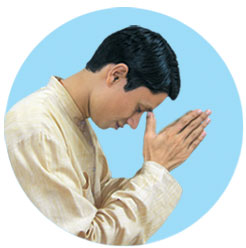
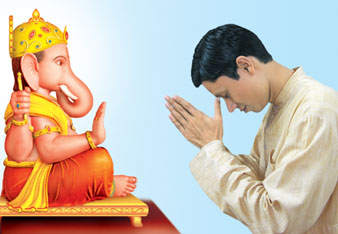
A. 'While paying obeisance to God, bring the palms together.
1. The fingers should be held loose (not straight and rigid) while joining the hands or palms.
2. The fingers should be20kept close to each other without leaving any space between them.
3. The fingers should be kept away from the thumbs.
4. The inner portion of the palms should not touch each other and there should be some space between them.

Note: The stage of awakening of spiritual emotion (Bhav) is important to the seeker at the primary level. Hence, for awakening spiritual emotion (Bhav), he should keep space in between the joined hands, whereas a seeker who is at the advanced level should refrain from leaving such space in between the palms to awaken the unexpressed spiritual emotion (Bhav).

B.
After joining the hands one should bow and bring the head forward..

C.
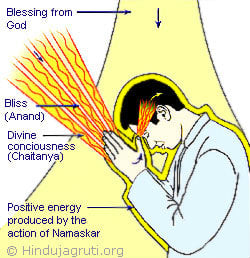
While tilting the headforward, one should place the thumbs at the mid-brow region, i.e. at the point between the eyebrows and try to concentrate on the feet of the Deity.

D.
After that, instead of bringing the folded hands down immediately, they should be placed on the mid-chest region for a minute in such way that the wrists touch the chest; then only should the hands be brought down.

Underlying Science in this action


A. The fingers should not be stiff while bringing the palms together because this will lead to a decrease in Sattva component from the vital and mental sheaths and thus increase the raja component in them. By keeping the fingers relaxed, the subtlest Sattva component will get activated. With the strength of this energy, embodied souls are able to fight powerful distressing energies.

B.
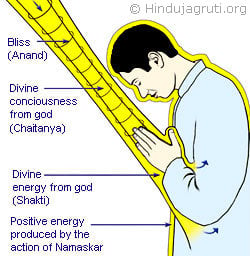
In the Namaskar posture, the joined fingers act as an antenna to assimilate the Chaitanya (Divine consciousness) or the Energy transmitted by a Deity. While joining the palms, the fingers must touch each other beca use leaving space between the fingers will result in accumulation of energy in that space. This energy will be immediately transmitted in various directions; therefore the seeker's body will lose the benefit of this potent energy.

C.
About the space to be maintained between the palms:
For a seeker at the primary level, it is advisable to leave space between the palms; it is not necessary for a seeker at an advanced level to leave space between the palms.

D.
After joining the palms, bow a little. This posture puts pressure on the navel and activates the five vital energies situated there. Activation of these vital energies in the body makes it sensitive to accepting sattvik frequencies. This later awakens the 'Atma shakti' (i.e. soul energy of an embodied soul). And later, Bhav is=2 0awakened. This enables the body to accept in large measures the Chaitanya emitted by the Deity.

E.
Touch the thumbs to the mid-brow region. (Please see images above..) This posture awakens the Bhav of surrender in an embodied soul, and in turn activates the appropriate subtle frequencies of Deities from the Universe. They enter through the 'Adnya chakra' (Sixth of the 7 chakras in the Kundalini) of the embodied soul and settle in the space parallel to it at the back interior of the head. In this space the openings to all the three channels converge; namely, the Moon, the Central and the Sun channels. Due to the movement of these subtler frequencies in this space, the Central Channel is activated. Consequently it facilitates the speedy transmission of these frequencies throughout the body, leading to purification of both the gross and subtle bodies at the same time.

F.
After doing Namaskar, to completely imbibe the Chaitanya of the Deity (that has entered the hands by now), instead of bringing the folded hands down immediately, place them on the mid-chest region in such a way that the wrists touch the chest.

The 'Anahat chakra' is located at the centre of the chest. Akin to the Adnya chakra, the activity of the Anahat chakra is also to absorb the Sattva frequencies. By touching the wrists to the chest, the Anahat chakra is activated and it helps in absorbing more of the Sattva component.


Effect of this Posture


By doing Namaskar in this manner, the Deity's Chaitanya is absorbed to a greater extent by the body, as compared to other methods of doing Namaskar. This gives maximum distress to negative energies. The negative energies that have manifested in a person are unable to touch their thumbs at the mid-brow region in Namaskar. (The negative energies are subtle. But at times they enter an individual's body and manifest it. - Editor)'

Q. What is the reason for not wrapping a cloth around the neck while performing circumambulation, doing Namaskar, ritualistic worship, sacrificial fires, chanting and while visiting Guru and deities?

A. When a cloth is wrapped around the neck, it does not activate the Vishuddha chakra (in the throat region) and hence an individual gets less benefit of the Sattva component.


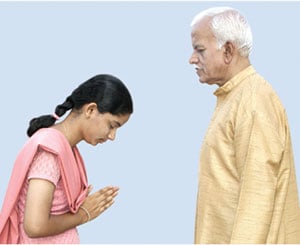
Why should one always do Namaskar to elders?


Meaning: When an elderly person arrives, the vital energy of the young person starts rising and when he gets up and does Namaskar, it returns to normal. - Manusmruti 2.120; Mahabharat, Udhyog, Chapter (Section) 38.1, Sr. no. 104, 64-65

Explanation: 'As the sojourn of the elderly person is gradually towards the southern direction, that is, towards the region of Lord Yama (towards death), his body starts emitting raja and tama frequencies on a high scale. When such an elderly person comes in the vicinity of any younger individual, these frequencie s start affecting the younger person. A subtle magnetic field is created between the two. Consequently, the vital energy of the younger person is pulled upward. This way the younger person can suffer due to sudden momentum to his vital energy. When this younger person doesNamaskar to the elderly person, some amount of the Central channel of his Kundalini system is activated and the Sattva component in it starts increasing. Consequently the raja and tama components in him are influenced by the Sattva component and the vital energy comes back to normal state.
Hence on arrival of an elderly person, it is customary for the younger individuals
to do Namaskar to them.'


D'oing Namaskar to Elders.

< /FONT>When travelling, prior to the commencement of a journey and upon returning, why should one do Namaskar to elders in the family?


'Namaskar to the elders in the family is one way of surrendering to the God principle in them. When an embodied soul bows in Namaskar to an elder by surrendering to the God principle in him, at that time a sense of compassion is created in his body. This compassion percolates right upto his subtle body. At that time, energy of his mind is activated and in turn activates the five vital energies, which are located at the seat of the Manipur chakra (situated in the Naval region). Transmission of these five vital energies all over the body then awakens the soul energy. With the strength of the soul energy, the Central channel gets activated and converts the expressed energy of spiritual emotion to the unexpressed energy of spiritual emotion. With the help of this unexpressed energy of spiritual emotion, the embodied soul, through the medium of elders, gains the required Deity's principle from the Universe. For this purpose, while leaving the house on a
journey, the embodied soul should do Namaskar to elders and with the strength of Sattva frequencies has to protect himself from distressing frequencies in the atmosphere. Similarly, returning from a journey, one should immediately do Namaskar to elders and awaken the God principle in them, which would disintegrate the raja-tama particles from the air around him, which might have been brought along.


What is the correct method of doing Namaskar to Saints?

1.. The portion of head, which should be placed at the feet :

We can imbibe maximum Chaitanya through the Brahmarandhra (the seventh chakra of the Kundalini system located in the crown of our head). Since it (Brahmarandhra) cannot be placed at a Saints's feet, the part of head beginning above the forehead is to be placed at the feet of Saints.. Due to this, maximum Chaitanya emanating from Their feet can enter into the one doing Namaskar.

2. The exact spot to place one's head on a Saint's feet:

The big toes of Saints emit maximum Chaitanya; hence we should place our head on the big toe, than on their foot. If we are in a position to touch both the20toes, then place the head on the right big toe.

3. The position of hands when placing the head on a Saint's feet:

a. Some interlock their hands behind their backs at the waist and do Namaskar. If we are in a position to touch both their toes, then we should place the hands one on each foot and the head should be placed on the big toe of the right foot. If we are in a position to touch one of Their toes, then place both the hands on it and keep the head on the big toe.

b. Some do Namaskar by placing hands on the ground. This is also wrong because if the hands are placed on the ground then the Chaitanya emanating from the Saint's feet are absorbed by one and then returns to the earth through the hands of the one doing Namaskar. Thus the person does not benefit from it.


c. Some cross their hands and place them on the feet of Saints, that is, their right hand on the right foot of the Saint and their left hand on the left foot of the Saint while doingNamaskar. This is a crude imitation of the manner in which Christians place their crossed hands on their chest. Instead, our right hand should be placed on the left foot of the Saint and our left hand on the right foot of the Saint. This is convenient also. However, if a Guru has started some procedure in a particular sect, then the hands are to be placed in that manner only.

d.
The hands are to be positioned in such a way that the palms are placed on the feet..


How to do Namas kar to the wooden footwear (paduka) of Saints?


Namaskar to the wooden footwear (paduka) of Saints

'The left paduka symbolises Lord Shiva and the right symbolises Divine Energy. The left paduka is the unmanifest saviour energy and the right is the unmanifest destroyer energy of the Supreme God. The saviour or destroyer energy of the Supreme God emanates from the 'pegs' of the paduka as per the need. When we do Namaskar by placing our head on the 'pegs' of the paduka, some may experience distress due to the inability to tolerate the manifest energy emitting from it. Hence, while doing Namaskar to the paduka, instead of the pegs, place the head on the for emost part i.e. the place where the Saints place their toes.'


Should one do Namaskar to a dead body?


Q. If this be so, should we do Namaskar to the dead bodies in Kaliyuga only as a custom? If it is a custom, can we discontinue it?

A. One can maintain respect for the dead person by doing Namaskar and in addition set an ideal with regards to respecting elders. In Kaliyuga, from this one will benefit at an emotional level and not at a spiritual level. However, one should not discontinue this custom; instead one could learn how to get spiritual benefit from it. Due to the deterioration of the Sattva component in embodied souls, this practice has become a mere custom in Kaliyuga.

However, as per the saying, 'God exists where there is spiritual emotion', while doing Namaskar to a dead body if we have a spiritual emotion that we are doing Namaskar to the God principle in it, then the God principle in the dead body awakens and we receive God's blessings. This happens because the God principle is immortal and has no limit ations that a physical body has.


Q. It is said that one should not do Namaskar to a sleeping person. In Kaliyuga if one does Namaskar by touching the dead body, then are the chances of getting distress from negative energies not higher?


A. Yes it is; but while doing Namaskar it is important that the action be performed with correct spiritual emotion. Since Namaskar is done to the God principle in the dead body instead of activating raja, tama components, it activates the Godly principle in the dead body and bestows Sattva corresponding to the degree of spiritual emotion.'


'One hand' touch to the Temple Steps

Action: Touch the step with the fingers of the right hand and move the same hand over the head.

Science: 'The area around the temple is charged with20frequencies of Deities which leads to an increase in the Sattva component. The presence of Divine consciousness in the area charges even the stairs in a temple. 'Climbing' steps is one of the activities, which increases the raja component in the body. Hence, the raja component is already activated in the body of an embodied soul so by touching the steps with the fingers of the right hand, the Sattva component and peace from the charged premise, get transmitted to the body through the right hand. In addition, from this action, the activated raja component in the body can be controlled through the medium of the surya nadi (Sun channel). This means that, for a moment, the activities of the Sun channel can be stopped. From this process, the embodied soul learns to enhance the Sattva component through raja dominant actions. Therefore, it is very essential to perform the appropriate sattvik actions at
each corresponding level, hence the method of touching the steps with fingers of the right hand and then moving the fingers or palm over the head. Even the dust present on the steps is charged with Chaitanya and so we must respect it and derive spiritual benefit from it. If the embodied soul harbours the spiritual emotion that 'the Chaitanya from the steps be transmitted all over my body from the dust on my hand', then it will give increasing benefit to the embodied soul.. In addition if the ego of the embodied soul is less at that time then it gives even more benefit. When any action is performed devoid of ego or 'I'ness it is treated as a 'non-action' (akarma-karma) .'


Do's and Dont's while doing Namaskar

Q. Why should the eyes be closed while doing Namaskar?

'Joining hands while bowing the head amounts to saluting God or the divinity in the person in front. The eyes are closed while doing Namaskar to God or any respected person, to enable one to have the vision of God within us.'

Q. Why should the footwear be taken off while doing Namaskar?


While sitting, partaking meals, sleeping, wishing and doing Namaskar to Gurus and other elderly people, footwear should not be worn. - Gautamsmruti 9.

1. Footwear increases the raja-tama components in a person.

2. Paying obeisance (Namaskar) with high raja-tama components will not help in activating the Kundalini (centre in the spiritual energy system).

3. The ability to absorb the sattva component too is reduced, due to an increase in the raja-tama components, leading to little benefit from a Namaskar.

4. Doing Namaskar to a Deity, with footwear on, may also invite the wrath of the Deity.'

Q. Why is it not advisable to hold any object while doing Namaskar?


1. While doing Namaskar if an object is held in the hands, usually the fingers and their tips are in a curled position and not straight. As a result, the sattva component received is unable to enter the tips of the fingers.

2. The sattva component emitted towards the seeker, strikes the object held and bounces back. Also, at times, instead of the person absorbing the sattva component, the object may absorb it.

3. If the object in the hand is raja or tama predominant, and if it is touched to the forehead or chest while doing Namaskar, then the raja-tama components from it mayenter the body of the one who is doing Namaskar.

Q. While doing Namaskar, why are men not supposed to cover their head, whereas women are advised to cover their head?


One should not do Namaskar with footwear on, covering the head or holding any objects. (But women should cover their head with their saris and only then do Namaskar) - Apastamb Dharmasutra 1.4.14.19

While doing Namaskar the Kundalini gets activated at the chakra which is touched by the folded hands. This leads to the absorption of the Sattva component in greater proportion in the body. Sometimes due to the activation of the Kundalini, Sattva component starts entering the body through the head. But at times the distressing energies try to take advantage of this and mix black energy with the Sattva component.. The potential to activate the Kundalini is higher in men as compared to women. Hence they are hardly affected by this negative energy. Contrary to this, as women are more vulnerable, they get affected by distressing energies to a greater extent and thus they can experience distress. That is why, when doing Namaskar, women are advised to cover their head with the ends of their sari. This creates a barrier between the head and the distressing energies and prevents themfrom penetrating the body of the woman. However, to some extent this also blocks
benevolent frequencies from entering the women. (Benevolent frequencies are subtler than negative frequencies; hence they enter a woman to some extent even though the sari covers her head.) However, the proper posture of Namaskar gives maximum Sattva component to an individual and hence women too get required benefits. This shows how God takes care of every devotee. Doing Namaskar without these restrictions is equally effective if the devotee does it with spiritual emotion.

Source -
http://www.hindujag ruti.org/ hinduism/ knowledge/ category/ namaskar


--
-- --

" There is no market for your sorrows. So, never advertise your feelings..."


.

_


THE DIVINE TOUCH

Blog EntryTHE DIVINE TOUCHJul 23, '09 9:30 AM
for everyone
I went ahead and found Swamiji [Swami Vivekananda] standing at the door. On seeing me he said, 'You are the first to come; come along.' Saying so he took me to a small room, and sitting down on a small rug asked me to sit on another.
Soon, Swamiji entered into a meditative state and passed into the realm of savikalpa samadhi- the body still, limbs motionless, spine erect, eyes fixed and bright; with feeling, power, love, and bliss welling up in his face; and gravity intensifying all the other moods. ...
After remaining immersed in samadhi for quite some time, he controlled his mind and taking my right hand in his own remained quiet for a while. Next he started telling me about my past. ... When Swamiji was holding my hand, all my desires and thoughts subsided. There was neither inclination nor disinclination- no desire, no wish; even bhakti and mukti were gone. All was peace; the world was peaceful, steady and calm. Creation was, Creation was not; [all was] filled with bliss. And there was something beyond bliss that I cannot describe in words-I began to enjoy that. Peace, peace, supreme peace-- all-pervading peace. ...
I do not know how long I was in that state. Slowly I found my mind descending from that high state and entering my body, and I started faintly apprehending the room and other objects, like one just awakened from sleep. ... But one new thing became evident- a sweetness and peace pervaded all objects. Every object appeared holy and dear to me, something to be reverenced. I saw that the wind was holy, space was holy, the waters were holy, the directions were holy, every created being was holy!
--SWAMI SADASHIVANANDA

FW: Hindu Temple in Mecca


Date: Thu, 23 Jul 2009 10:35:43 -0400
To: bhadesia@hotmail.com
From: multiply@multiply.com
Subject: Hindu Temple in Mecca

dr.jayant bhadesia (bhadesia@hotmail.com) has posted a new blog entry.

Blog EntryHindu Temple in MeccaJul 23, '09 10:33 AM
for everyone
Hindu Temple in Mecca


the kaaba in mecca is actualy SHIVA LINGA.the word allah itself is a sanskrit word meaning 'goddess'.to this day there r inscriptions in sanskrit language on the kaaba.As the pilgrim proceeds towards Mecca he is asked to shave his head and beard and to don special sacred attire that consists of two seamless sheets of white cloth. One is to be worn round the waist and the other over the shoulders. Both these rites are remnants of the old Vedic practice of entering Hindu temples clean- and with holy seamless white sheets.The main shrine in Mecca, which houses the Siva emblem, is known as the Kaaba. It is clothed in a black shroud. That custom also originates from the days when it was thought necessary to discourage its recapture by camouflaging it.Muslim pilgrims visiting the Kaaba temple go around it seven times. In no other mosque does the circumambulation prevail. Hindus invariably circumambulate around their deities. This is yet another proof that the Kaaba shrine is a pre-Islamic Indian Shiva temple where the Hindu practice of circumambulation is still meticulously observed.The practice of taking seven steps- known as Saptapadi in Sanskrit- is associated with Hindu marriage ceremony and fire worship. The culminating rite in a Hindu marriage enjoins upon the bride and groom to go round the sacred fire four times (but misunderstood by many as seven times). Since "Makha" means fire, the seven circumambulations also prove that Mecca was the seat of Indian fire-worship in the West Asia.


The Islamic practice of Bakari Eed derives from the Go-Medh and Ashva-Medh Yagnas or sacrifices of Vedic times. Eed in Sanskrit means worship. The Islamic word Eed for festive days, signifying days of worship, is therefore a pure Sanskrit word. The word MESH in the Hindu zodiac signifies a lamb. Since in ancient times the year used to begin with the entry of the sun in Aries, the occasion was celebrated with mutton feasting. That is the origin of the Bakari Eed festival.[Note: The word Bakari is an Indian language word]


The Islamic term `Eed-ul-Fitr' derives from the `Eed of Piters' that is worship of forefathers in Sanskrit tradition. In India, Hindus commemorate their ancestors during the Pitr-Paksha that is the fortnight reserved for their remembrance. The very same is the significance of `Eed-ul-Fitr' (worship of forefathers) .The Islamic practice of observing the moon rise before deciding on celebrating the occasion derives from the Hindu custom of breaking fast on Sankranti and Vinayaki Chaturthi only after sighting the moon.Barah Vafat, the Muslim festival for commemorating those dead in battle or by weapons, derives from a similar Sanskrit tradition because in Sanskrit `Phiphaut' is `death'. Hindus observe Chayal Chaturdashi in memory of those who have died in battle.The word Arabia is itself the abbreviation of a Sanskrit word. The original word is `Arabasthan' . Since Prakrit `B' is Sanskrit `V' the original Sanskrit name of the land is `Arvasthan'. `Arva' in Sanskrit means a horse. Arvasthan signifies a land of horses., and as well all know, Arabia is famous for its horses.Four months of the year are regarded as very sacred in Islamic custom. The devout are enjoined to abstain from plunder and other evil deeds during that period. This originates in the Chaturmasa i.e., the four-month period of special vows and austerities in Hindu tradition. Shabibarat is the corrupt form of Shiva Vrat and Shiva Ratra. Since the Kaaba has been an important centre of Shiva (Siva) worship from times immemorial, the Shivaratri festival used to be celebrated there with great gusto. It is that festival which is signified by the Islamic word Shabibarat. Since Eed means worship and Griha means `house', the Islamic word Idgah signifies a `House of worship' which is the exact Sanskrit connotation of the term. Similarly the word `Namaz' derives from two Sanskrit roots `Nama' and `Yajna' (NAMa yAJna) meaning bowing and worshipping.


All Arabic copies of the Koran have the mysterious figure 786 imprinted on them . No Arabic scholar has been able to determine the choice of this particular number as divine. It is an established fact that Muhammad was illiterate therefore it is obvious that he would not be able to differentiate numbers from letters. This "magical" number is none other than the Vedic holy letter "OM" written in Sanskrit. Anyone who knows Sanskrit can try reading the symbol for "OM" backwards in the Arabic way and magically the numbers 786 will appear! Muslims in their ignorance simply do not realise that this special number is nothing more than the holiest of Vedic symbols misread.U can try reading it urself.look at the figure OM in a mirror and you can make out the Devnagari (Sanskrit-Hindi) numerals 7-8-6


Add a Comment


Copyright 2009 Multiply Inc, 6001 Park of Commerce, Boca Raton, FL 33487, USA
Stop e-mails, view our privacy policy, or report abuse: click here


Videos Get the latest video streams on movies, Try it!

Thursday, July 23, 2009

Arab Countries Buying Agricultural Land in Asia for Food Security


FARM NEWS

Arab states in 'neo-colonial' food grab


The land purchases by the wealthy Gulf states, spearheaded by Saudi Arabia, were triggered by the global food crisis of 2008. High prices led to food riots in several countries and thrust food security to the front of the world's political agenda. Photo courtesy AFP.


by Staff Writers
Kuwait City (UPI) Jul 16, 2009

A Kuwaiti company partly owned by the emirate's sovereign wealth fund is preparing to join other Gulf states in buying up agricultural land in Asia, part of a global land grab to ensure food security.

Unlike the governments and corporations in the Gulf that have been acquiring vast tracts of arable land, mainly in poor countries of Africa, Asia, Latin America and Eastern Europe, to produce food for their own people, the Kuwait China Investment Co. wants to invest on a purely commercial basis, selling its produce to anyone who can pay for it.

"We think it's an opportune sector that will help Asia effectively become the breadbasket of the world," Ahmad al-Hamad, managing director of KCIC, said this week.

"We think food security, in the long term, is better served by collaborative investment in Asia as opposed to security crops exclusively for one country."

But others see danger ahead. Jacques Diouf, director general of the U.N. Food and Agriculture Organization, has warned that the headlong drive by rich food-importing countries to buy up vast tracts of farmland in the world's poorer states risks "creating a neo-colonial" agricultural system.

The land purchases by the wealthy Gulf states, spearheaded by Saudi Arabia, were triggered by the global food crisis of 2008. High prices led to food riots in several countries and thrust food security to the front of the world's political agenda.

At the Group of Eight summit in L'Aquila, Italy, on July 10, the world's leading industrialized nations launched a $15 billion initiative to help farmers in poor countries boost production over the next three years. That marks a significant shift in how the West plans to tackle world hunger, but it's unlikely to curb land grabs by some of the world's wealthiest states.

Shrinking water resources, growing populations and little arable land are forcing the Gulf states and other Arab countries to spend billions of dollars to acquire hundreds of thousands of acres of farmland abroad to ensure long-term food security.

"For the Gulf countries Â… under current technology, it's impossible to guarantee their food security internally because they lack water resources and arable land," said Mohammed Raouf, program manager of environmental research with the Gulf Research Center, a Dubai think tank. So land acquisition abroad "is the best policy to follow now."

Lennart Bage, president of the U.N. International Fund for Agriculture Development in Rome, says that land was long considered less important than oil or mineral resources.

But now, with food prices having doubled on average from a year ago, "fertile land with access to water has become a strategic asset."

Countries in the Middle East and North Africa with limited arable land have to import most of their food. And the cost of those imports has mushroomed from $16 billion in 2006 to $20 billion in 2007, according to the Arab Organization for Agricultural Development.

By acquiring farmland abroad and shipping the produce home without providing any to the countries where they are operating, the Arab states could cut food prices for their own people by 20 percent to 25 percent through bypassing world markets.

But many of the countries whose farmland is being snapped up are already unable to feed their own people, and it may be just a matter of time before that triggers anti-government unrest and the resource wars that many fear will erupt in the coming decades.

"Where once they used gunboats and sepoys, the rich nations now use checkbooks and lawyers to seize food from the hungry," George Monbiot, a leading environmentalist and academic, wrote in Britain's Guardian newspaper.

"The scramble for resources has begun, but -- in the short term at any rate -- we will hardly notice. The rich world's governments will protect themselves from the political cost of shortages, even if it means that other people must starve."

__,_._,___


--

Hindu statesman Zed bestowed with 'Vishwa Hindu Ratna' award

Blog Entry Jul 23, '09 1:44 AM
for everyone

Hindu statesman Zed bestowed with 'Vishwa Hindu Ratna' award

July 19, 2009

Ashadh Krushna Dvadashi, 5111

Know more about Hindu Dharmasabha held at Virginia, USA

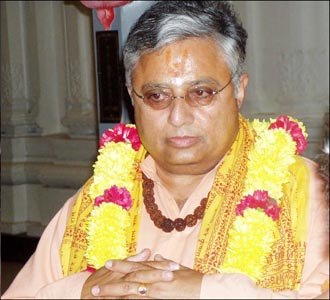
Washington: Acclaimed Hindu statesman Rajan Zed was given “Vishwa Hindu Ratna Award� (World Hindu Gem Award) at the American Hindu Dharma Sabha, a national gathering of prominent Hindu leaders and activists, near Washington DC (USA) today.
Award citation said: “For Efforts to provide worldwide Hindu identity, enhance understanding about Hinduism and encourage Inter-religious dialogue.� Dr. Siva Subramanian, American Hindu temples leader, presented Zed with the award and a shawl at this Sabha in Durga Temple of Virginia at Fairfax Station.
Rajan Zed is a well-known Indo-American and Hindu statesman who has taken up Hindu, interfaith, religion, environment, Roma and other causes all over the world. He was invited by President of European Parliament, Hans-Gert Pottering, in December 2008 in Brussels (Belgium) for a meeting to promote interfaith dialogue and discuss Hindu issues. He read the groundbreaking first Hindu opening prayer in United States Senate in Washington DC during its 218 years history. He is one of the panelists for “On Faith�, a prestigious interactive conversation on religion produced jointly by Newsweek and washingtonpost.com.

He has been awarded “World Interfaith Leader Award� and various other honors. He is President of Universal Society of Hinduism, Chairperson of Indo-American Leadership Confederation, Director of Interfaith Relations of Nevada Clergy Association, Spiritual Advisor to National Association of Interchurch and Interfaith Families, etc.
 
http://www.hindujagruti.org/news/7450.html


With Windows Live, you can organize, edit, and share your photos.