Saturday, December 20, 2008

Indian TV News Channels draw flak for "irresponsible" reporting of Mumbai Attack

Indian TV News Channels draw flak for "irresponsible" reporting of Mumbai Attack

By Hardnews - December 6th, 2008

http://www.hardnewsmedia.com/2008/12/2454

Samarth Pathak Hardnews

For 60 nightmarish hours last week, Mumbai burnt in a blaze of terror. 60 hours, which claimed nearly 200 innocent lives as the city went under siege in the most audacious terrorist strikes to have ever taken place in India. 60 hours, for which our forces were engaged in a virtual war as terrorists wreaked havoc. And 60 hours, for which Indians, irrespective of their religious or regional identities, were glued to their TV sets as news channels went on a frenzy to gain TRP's under the guise of 'Breaking News".

According to Indiantelevision.com, ratings of most channels recorded a significant growth last week due to the live non stop coverage of the Mumbai siege. NDTV 24x7 got 30 per cent of viewership, thus making it the highest gainer amongst the English channels. Times Now got 28 per cent, while CNN-IBN received 24 per cent ratings during the four day period from November 26 to November 30. Amongst the Hindi channels, Aaj Tak ruled the roost with 23 per cent share of the viewership, while India TV got 21 per cent ratings. Undoubtedly, the channels gained what they desired - TRP's. But they lost respect in the bargain.

All ethics of journalism took a backseat as reporters strived to outdo each other to grab eyeballs and boost ratings. Concerned viewers who tuned in to get the updates on the vicious massacre had no choice but hear reporters 'shouting' out the news as the saga unfolded. Breaking all security cordons, and putting not only theirs but also the lives of other security personnel in jeopardy, members of the media bloated in self importance as their reports went on-air. Reporting live, many journalists spiced up their coverage by speaking in a panic stricken tone, which became 'the' formula to catch the viewer's attention. Many reporters from the Hindi electronic media resorted to stunts like lying on the ground to relay the news, which was clearly unnecessary as their very own camera crew were standing! A reporter from India TV had a close shave when a live grenade exploded barely meters away from where he was reporting. Instead of realising the immense danger he and his other colleagues in the media were in, this reporter became the 'braveheart' of India TV as the channel's scroll aired his bravery and commitment to relay the bit by bit news to the viewers.

Even a senior correspondent like Barkha Dutt of NDTV has drawn flak for her hysterical coverage. Worse, she has been criticized for hyping the tragedy by posing insensitive questions to those affected by the attack. "I felt quite repulsed by her 'out of breath' style of reporting. Good journalists never betray their emotions, and are objective. But this was clearly not the case with Barkha Dutt's reporting. On many occasions, I felt she was about to cry, and I think it was just to capture the public's sympathy. Even the manner in which she posed her questions to the worried relatives of the hostages standing outside the hotel were quite insensitive. Asking someone 'how do you feel when you think of your husband stuck inside with the terrorists?' is just not done." Subodh Kumar, a professor of Political Science at the University of Delhi told Hardnews.
Barkha was rattled by the scathing criticism and was forced respond on
ndtv.com, "In the 72 hours that we stood on reporting duty, not once were we asked to move further away. We often delayed live telecasting of images that we thought were sensitive so as to not compromise the ongoing operation. Not once, were we asked by anyone in authority, to switch our cameras off, or withhold images. Also, every interview of a relative that was aired on any of my shows, was done so with the full consent and participation of the people speaking. In every case, it was their choice to share and to speak. And their voices were in fact the real tragedy and needed to be heard and told."

The media has also been widely criticised for not exercising restraint while giving details of the operations conducted by the forces. There are two theories doing rounds. One is that the terrorists were in constant touch with their masters through blackberry phones, who gave them updates on the positions of the commandos as conveyed by the media. This was backed by the Chief of Navy in a recent press conference. The second theory, propounded by bloggers, many of whom were also eyewitnesses to the siege, is that the terrorists got all the updates through the TV channels themselves, as the cable connections at the Taj had not been disconnected. This, however, is not confirmed officially. Yet, there is no doubt that the TV channels disclosed a lot of crucial information on the strategy employed by the commandos. A serving officer in the Indian Air Force told Hardnews on the condition of anonymity: "Almost all TV cameras zoomed onto a helicopter which was surveying the entire area, and many reporters incorrectly stated that it was being used to intimidate the terrorists. Also, the positions of the forces on top of the roof were revealed by the over excited reporters, thus taking away the element of surprise vital to any operation." In a recent press conference, Chief of Navy Admiral Sureesh Mehta also blasted the media for their irresponsible reporting. He said, "Do you really have to give minute-by-minute coverage? Media is an enabling instrument, but today it is a disabling instrument."

While the reporters out there at the scene of action were clearly messing around with public sentiment, the "news readers' or "anchors" were no better. Arnab Goswami of Times Now, who anchored for virtually the entire 60 hours, could not hide his rage as his voice often quivered with anger at the terror strike. He was short on objectivity and contributed in feeding unnecessary jingoism. Rajdeep Sardesai of CNN-IBN stated on air that there had been fresh rounds of firing at the Chhatrapati Shivaji Terminus on the Mumbai siege. This turned out to be a rumour, but his decision to go on air without get an authoritative corroboration shows him in poor light. Ironically, his bloomer came just a few days after he had taken over as the head of India's Editor's guild, an organization devoted to upholding ethics in media. Though he later apologised, many feel that he should have been more responsible.

The Hindi TV channels did even worse. India TV aired exclusive interviews with two 'terrorists', Shahadullah and Imran Babar, while they were wreaking havoc at the Taj and Nariman House. "Giving free air time and publicity to terrorists is unpardonable. That is precisely what they desire. Giving them their shot at fame only motivates them. To add to that, our anchors asked stupid questions like 'How many people do you wish to target?' and 'From which country are you from?' As if they would actually confess. The lack of perspective and depth in many of our anchors is shocking." says Shom Bannerji, a freelancer. Aaj Tak magnified the terror even more as their anchors spoke in a haunting tone. 'I sincerely feel that this particular tone of voice can also have a considerable impact on the minds of the viewers. Is it really necessary to speak like that? Look at the newsreaders at CNN and BBC. Even during the 9/11 and the London bombings, they remained calm in their composure. They gave out facts, and did not express their own personal opinions. That is journalism." adds Shom.

Inaccuracy, which is a sin in journalistic jargon, also ruled the roost. Many reporters deemed fit to call anyone in uniform as an "NSG commando". A senior news director from a reputed TV channel said on the conditions of anonymity, "I was shocked when I heard the reporters there saying 'NSG commandos are now entering the hotel', while the visuals contained shots of the Rapid Action Force and members of the Anti Terror Squad. I know all this because I myself have served in the forces for some time. This clearly shows the lack of knowledge our reporters have about the forces." Reports of 'final assaults' were also claimed by many journalists, which actually took place 30 hours later. Just how, and who gave them the authority to proclaim this, we will never know.

Media has also received brickbats for showing its bias towards the 'elite' class, by focusing on the operations at the Taj, and not on those killed at CST and VT strikes. Sociologist Prabha Dayal opines, "The media always revolves around the power centers, and hence is usually pro-elite. Since most corporates have a stake in the media, journalists have lost their freedom to money and advertisers. That is why the Taj Palace hotel, which is frequented by the creamy layer of the society and foreigners, remained at centre stage. Journalists would say that they covered it because the operation was still on. But what about now? I do not know the name of even a single person who died at CST or VT. Is their life less important than those who died at Taj? It is a bitter pill, which the aam junta has to swallow. To the media, it is the top strata of the society who matter the most, so all the jazz about giving 'voice to the voiceless' is just a farce."

One of the cardinal rules of reporting a conflict is to relay the facts without editorialising and opinionating the content. This becomes all the more important while covering a terrorist strike of such magnitude, because it becomes the responsibility of the press to calm the masses and keep things under control. Yet, it seems that in the ever competitive world of the media, the rules of the game have been done away with. The need of a code of conduct, is hence gaining acceptance. As the fourth estate, the media is required to be socially responsible and a watchdog of the democracy, and not merely a money spinning machine. Freedom of expression, which the media swears by, also involves being accountable to the masses. But in the present day scenario, the words of Juvenal seem to come true- 'Who will guard the guards?'


Friday, December 19, 2008

When we met


When we metI knew deep insideIt was one of those momentsThat would be seared into my memory
That's how muchYou affected me
When we metI knew I couldn't forgetThe tenderness you showedYou were one of those rare, compassionate souls
And then I knewYou'd be in my life
When we metI knew with no doubtsYou were "the" and "only" oneThat I would deeply love for all eternity
You filled me upWith butterflies
I loved you thenI love you nowI'll love you for all eternity
When we metI knew way down insideIt was one of those momentsFull of butterflies

Plan Of New England


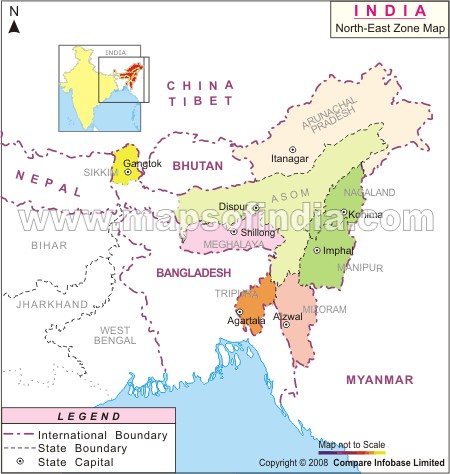
please read about plan of english people about new engalnd in north east of India


http://bhadesia.multiply.com/journal/item/951

Thursday, December 18, 2008

Not to take anything without efforts

Once Ravishankar Maharaj was distributing coconuts to poor people in village during drought period. All small children were lined up to take it. When all children finished taking coconuts, one girl was standing near by seeing this distribution. At last Ravishankar maharaj told her to take one coconut to her also. She refused telling that my mother has told me not to bring anything in free, without making efforts or paying for that. I will not take it. When function was over, Maharaja went to see her mother at her home. She was poor girl of poor mother staying in small torn out hut. Mother talked same thing as her daughter told. She told we have learnt this as tradition. They have lost father when girl was at younger age. But even with limited resources, mother made well for people to give drinking water to villagers. This was his husband’s dream which she has fulfilled. Now they were passing normal life with limited things at home but not taking from any one free.

Taj Group CEO - Interview

Taj Group CEO - Interview

Fareed Zakaria -- CNBC/Dow Jones Business Video, November 30, 2008 Sunday

ZAKARIA: Ratan Tata is the chairman of the Taj Group of hotels, and also the Tata Group -- the largest private corporate group in India. It has interests in steel, cars, communications, computer technology, power -- and, of course, hotels. Their revenues last year were $62.5 billion.
Ratan Tata is often described as India`s David Rockefeller. He joins me today to talk about how the attacks affect his hometown, the country and business in India.
Tell me how you felt when you first heard about the attacks.
RATAN TATA, CHAIRMAN, TATA GROUP AND OWNER, TAJ HOTEL: I`ve got to say that I was truly emotionally overcome when I saw this old, venerable, rather beautiful building going up in flames, and I kept hearing the grenades or explosives going on inside, the sound of gunfire, the fact that there were several hundred people in the hotel, either at dinner or living there. And I just felt tremendously helpless.
We can only say that -- you know, I have to say, the heroes of that evening were members of the staffs, many of them who lost their lives. But people used their heads and saved so many, and sheltered so many of the guests who were there either for dinner or otherwise, and got them out. But we`ve had a horrible loss of life, a completely wanton destruction of property.
And this morning, finally, after almost three days, we understand from the commandos that all of the militants are eliminated.
ZAKARIA: You must have known personally some of the people who lost their lives.
TATA: Yes, I did. And it was tragic, because some of the people had -- one in particular husband and wife were there to celebrate their anniversary. The husband made it, the wife didn`t.
I knew several of the staff members -- not well, but obviously by first name -- and they were gone. Some of them were gone just in cold blood, I understand, just shot in the head or shot at point-blank range. Others were shot in a wanton, sort of random fire that took place.
And all in all, it was just a horrible event that I never thought we would ever see in India, leave alone at the Taj.
ZAKARIA: When you were on your cell phone, trying to deal with this situation, did you feel that the police was responsive? Did you feel as though you were getting the cooperation you needed?
TATA: Well, you know, we were getting the cooperation that they could give us, but the infrastructure was woefully poor. Fires raged for almost three hours before we could get, on that first night, any fire engines who were there to respond with water. The police were woefully inadequate in terms of equipment and in terms of being prepared.
And it was only after the army and the commandos came in -- and even they were, in relative terms, ill-equipped against these militants, who were very well trained, seemed to have a plan of action.
And it has led me to believe that what the city really needs is a crisis management group that could step into action instantly when we have a situation like this, where there`s a plan of action, where they can deal with these kinds of crises instantly and well and professionally, and the people get equipped to do so.
We had people who died being shot through bullet-proof vests. And all in all, they`ve been ill-equipped.
ZAKARIA: It does appear from the outside -- many people are wondering why there weren`t more commandos there earlier, why they didn`t storm the hotel with hundreds of them to overwhelm them, why they didn`t use teargas.
Are these questions being asked in India?
TATA: Yes, they are. They`re being asked by us. We were told that their instructions were to minimize the collateral damage to the property. But that`s a question mark, because much of the property went up in flames and was allowed to flare -- for all of you who watched it on television have seen that happen.
But I think, you know, something I want to say is that, rather than have us succumb to this kind of terror, what it has done is, I think, given us a resolve that nobody can do this to us. It has united us in the Taj.
The staff has been fantastic. The spirit of the staff -- you know, we lost -- the general manager lost his whole family in one of the fires in the building. And I went up to him today, and I told him how sorry I was.
And he said, "Sir, you know, we`re going to beat this. We`re going to build this Taj back into what it was. We`re standing with you. We will build this thing back. We will not let this event take us down."
And that, I think, is the feeling that they have. And I have a feeling that that`s pretty much echoed throughout the country. We`re indignant, but we`re not scared. If there`s a view that has pulled us down, I think it`ll unite the country that much more.
ZAKARIA: Do you worry that it will scare foreign investors, that they might be spooked in some way by this?
TATA: Yes. I have no doubt that, certainly short term, that may happen. And if it does, it would be natural that it take place, because, if you talk to some of the people who have had to go through this experience, either in our hotel or the Oberoi or elsewhere, this doesn`t happen very often. And when it does, it spooks a lot of people, and rightly so.
So, we will have to do something as a nation to be able to deal with this kind of terror, if it is now being addressed to us, or directed to us. We`ve been very complacent, because we`ve really not had this kind of terrorism inflicted upon us.
And I think, as we look forward, we will have to put this into our equation of things we need to be prepared for. And crises infrastructure, I think is one that we will just have to address.
And if we need to get expertise from outside, we should not stand on ceremony to hold back. We should go to the best place possible to get expertise, and have that installed with us in terms of hardware, in terms of training, in terms of strategy.
ZAKARIA: Did you get this feeling that the terrorists seemed to know the hotel, and seemed to have plotted this very carefully in terms of the layout, where they moved?
TATA: Yes. There seems to be no doubt that they knew their way around the hotel, that they seemed to know it in the night or in the daytime. They seemed to have planned their moves quite well. And there seemed to have been a lot of pre-planning in terms of what they did, and how they managed to carry on for three days and sustain themselves during that time.
ZAKARIA: Could anyone have had some kind of inside connection?
TATA: I wouldn`t know. I think this would be something that the investigation will show up.
Certainly, they had a lot of planning that went into it. Whether it was themselves, whether it was assistance from inside, or whether it was just a very well planned, very well organized investigation of the property, I really don`t know.
ZAKARIA: And we will be back.
ZAKARIA: You had been warned that there was some danger of some kind of attack. You had elaborate security measures. And it appears that the terrorists waited until you relaxed them at the Taj Hotel, which again suggests some kind of either inside connection or very careful watching of the situation.
TATA: Yes, you know, it`s ironic that we did have such a warning, and we did have some measures to, you know, where people couldn`t park their cars in the portico where you had to go through a metal detector.
But if I look at what we had, which all of us complained about, it could not have stopped what took place. They didn`t come through that entrance. They came from somewhere in the back.
They planned everything. I believe they -- the first thing they did was, they shot a sniffer dog and his handler.
They went through the kitchen. They knew what they were doing, and they did not go through the front. All our arrangements were in the front.
ZAKARIA: You`ve been back now and seen the hotel. What did it look like?
TATA: It`s -- I`ve only been in the lobby and into the restaurant where the last shootout took place. And I went there this evening just before coming here. It`s a very, very sad and depressing sight.
The lobby is relatively untouched, at least at first glance. The restaurant where the firefight took place is riddled with bullet marks, and the walls are scarred with grenade blasts. And it looks like it`s been hit by a bomb.
And, you know, I have to say that the commandos that faced this were very courageous people. Those who lost their lives in this, I think really gave their lives for the job they had.
And the reason I say that we got cooperation is that the commandos really did whatever they could, given what they had. And they paid a penalty for it in terms of loss of life of some of their leaders -- very good officers.
And the staff also went far beyond the call of duty to serve the guests. So, on the whole, I would say that we really are very grateful for the people that did what they did.
And the whole affair is just devastating, because it was so well planned and it did so much damage. It took such a loss of life. People were shot point-blank. They were -- they sprayed bullets from automatic weapons. They lobbed grenades.
And they did this for three days. And that`s truly devastating. I understand the top floor of the hotel is gutted.
But we`re all committed that we will build back this hotel to what it is. However long it takes, whatever it takes, this hotel will stand.
I can only say that it somehow epitomizes the will of my great- grandfather, because it stood up to all the abuse it has. And we will have it in shape, hopefully, for another 100 years.
ZAKARIA: And in broader terms, India`s economy and India`s business -- you`re also going through a global slowdown, a financial crisis, at least in the Western world.
How will India handle this? Are you bullish about India`s prospects?
TATA: Well, I think that India doesn`t suffer from the same cause of economic turndown that is plaguing the West at this time. And I believe that, with an adequate infusion of capital and credit into the Indian economy, which the government can easily do at reasonable rates, that we can invigorate, or reinvigorate, the economy on a domestic basis, so that we can go through this period of downturn without too much strain in India.
But it will call for the government being bold in terms of what it puts back into the banks, and what it almost mandates the banks to do in terms of getting the credit to the consumer.
ZAKARIA: But you see domestic demand as being strong enough to keep things going at a reasonable growth rate.
TATA: Yes, I do. And mind you, we don`t have toxic paper. We don`t have subprime and mortgage problems.
The issue is that money had been drawn out of the economy to combat inflation. And if we can live with a slightly higher inflation, it is my probably uneducated view that we can reinvigorate the economy.
The global -- I mean, the domestic demand is quite strong. What is happening now is that there is no credit in the market, and whatever there is, is at very, very high interest rates.
ZAKARIA: And if you had a message to the world, who have witnessed all this and seen your hotel -- the hotel that your great- grandfather built -- go up in flames, what would it be?
TATA: I think my message would be that this has been a terrible blow to us, but we will, in fact, overcome the challenges that are ahead. It has not, in fact, diminished our commitment to go ahead with what we had in our minds, and that we will rebuild what has been damaged or destroyed, and that we will only come out stronger and, in fact, more determined than we were before this very unfortunate event took place.
ZAKARIA: Mr. Tata, our condolences to all your staff. TATA: We will not be defeated.
ZAKARIA: Thank you.
TATA: Thank you.

The War Against Hinduism

The War Against Hinduism

By Stephen Knapp

Over the years we have all heard about the many attempts that have been made in India to convert various sections of society from Hinduism to either Christianity or Islam. But only after one of my trips to India did I really get a much clearer understanding of what has been going on. Furthermore, most people, as well as many Indians, are not fully aware of how the war against Hinduism is happening, nor how serious it is. It is taking place on many levels, and because of this, in some areas the practice of Hinduism is declining rapidly.

When I was traveling in June of 2001, I had gone on a lecture tour, speaking every night at places like Mumbai, Nagpur, Warangal, Visakhapatnam, Vijayawada, Hyderbad, Bangalore, Trivandrum, and Chennai. So I had the chance to meet with many of the intellectuals and some of the spiritual leaders in these areas, and learned how conversion was a very hot issue.

Now I don't have anything in particular against Christianity itself. I was born and raised a Christian, so I know what it is, but also how they work. My main contention is when the teachings that are said to come from Jesus are twisted and misinterpreted into something that does not spread the genuine love of God and humanity that we are all supposed to develop, but becomes the dog-like barking and criticism against every other religion that is not Christian. This does not only go on toward every religion outside of Christianity, but also within it between Catholics and Protestants and other denominations. It seems that this faith has become not something that promotes our similarities for cooperation, but our differences in that everyone who is of an unrelated Christian denomination are all going to hell.

In regard to India, there is a great number of missionaries of various denominations who are working there right now, all competing for the most number of converts. The Southern Baptists alone are a group that has nearly 100,000 career missionaries in North India, all working to spread the "good word." We also find that in order to make converts from Hinduism some of the numerous Catholic priests in Southern India dress like sannyasis, and call their organizations ashramas. This is to make Christianity more similar to the Vedic traditions. Bharat Natyam dance is also taught in the Christian schools, but with Christian symbols and meanings replacing the Vedic. This is all in the attempt to actively sway Hindus over to Christianity.

One way they are trying to bring Christianity deep into the culture of India is by superimposing its rituals, symbols, and even types of dress on the Hindu forms of the same. Thus, you will see the cross on the lotus, some priests dress in saffron, and some churches have the ambiance of a Hindu temple. If this keeps up, maybe one day Christianity will be more Hindu than Christian.

While traveling in the far Northeastern states of India I have seen some of the tactics that the Christian missionaries have used to help make converts, such as offering cheap polyester pants to the tribals of the Northeast if they become Christian, or even offer motor bicycles if they help convert their brothers, which also means their wives and family. In other places like Madhya Pradesh, as noted in the Neogy Report, the missionaries give small loans on interest to the tribals, who cannot pay back such loans easily. However, if they become Christian, then such loans and the interest are dismissed. This is what goes on in the democracy of India, and under the tolerance of the Hindus, while if one such incidence would ever occur in a Muslim country, the result would be an immediate expulsion of the missionary from that nation.

Another trick that has been done is that missionaries, while treating the sick, will give medicine of no value and ask the tribal to take it while offering prayers to his local deity. Naturally, no cure of disease is likely to occur with the useless medicine. Then the missionary gives the tribal real medicine and asks the tribal to take it while offering prayers to Jesus. Then when there is a recovery, it is attributed to the power of Christ and not to the medicine. Such conversion activities take place these days more often in the tribal areas under the guise of social service. However, true social service should be done without expecting anything in return, including conversion.

Another thing that takes place is mass healings at meetings similar to revivals. What they do is pay people to attend the healings portraying themselves as being sick, or invalids on crutches, etc., who then get called up and are miraculously cured of their disease. This is attributed to the power of Christ, which then convinces many tribals that they too can benefit in various ways if they become Christian. This has not had much of an effect amongst the Brahmana classes, but the lower classes who attend are more vulnerable and are impressed by such things, and are then swayed toward Christianity. This is why Christian conversion tactics have been focused more toward the tribal areas than other regions of India. So these conversions are not taking place due to pure preaching of the Bible or the message of Jesus, but are accomplished by trickery and the emphasis on material facility. This is, of course, what is being objected to by the general Hindu population. However, when or if people convert for purely spiritual reasons, then there is no objection.

Another way conversions are accomplished is with the promise to the Dalits or the lower caste Hindus that they will not have any more caste recognition by becoming Christians. However, after conversion many find out that this is not true. Even amongst the converted Christians there is found to be a caste mentality, with the lower castes forced to use separate doorways, separate seating, or have marriages performed only among equal caste Christians and in separate facilities, or to even be buried in separate cemeteries. When this becomes obvious to those who are newly converted, some of them want to come back to being Hindus again, which has been facilitated by such organizations as the Vishwa Hindu Parishad (VHP).

An interesting point is that in spite of these duplicitous ways of converting that the Christians have used, the Christian churches have threatened violence against the process of reconversion back to Hinduism that had been launched by the VHP. It is as if they do not want anyone to have the right to do what they are already doing. It was Rev. V. K. Nuh, secretary of the Nagaland Baptist Convention who said, "If someone tries to impose their faith, Christians in this region will not surrender. There will be a battle and we shall have no option. There will be a physical and religious war if attempts are made to propagate Hinduism by forceful means in the Northeast." In this same line of thinking, Rev. M.D. Oaugma, head of the Garo Baptist Convention of Meghalaya said, "It could be a threat to Christianity if we remain silent to the VHP's game plan of mass conversion. We shall have to fight, we shall have to resist." (Maharashtra Herald, July 11, 1998)

Of course, it is easy for Hindus to be nonchalant toward other religions because they feel that each spiritual path takes you toward God. So in this light, it is alright to be tolerant of them or let them thrive. But the problem is that not all religions feel the same way toward Hinduism. Some feel that Hinduism is a culture that should be removed or destroyed. An example of this is that in Northeast India, in states like Assam, Nagaland, and Manipur, they have witnessed a surge of nearly 200% in their Christian population in the past 25 years due to the wily tactics of foreign missionaries. Their grasp is so strong now that practicing Hinduism is forbidden in some areas. Where is the democratic freedom in that? Hindus can no longer do worship or arati in the open because of the fanaticism in parts of the land. Durga puja has become almost obsolete as deities are destroyed or stolen in broad daylight. This confrontational climate has led to numerous militant outfits sponsored by the Church who are fighting for secession from India. So now the Northeastern portion of India wants to secede from it, and another part of India will be lost if this should happen.

If the Catholic Church in particular is supposed to espouse the message that God is love, and that it is by love of God and neighbor that mankind is saved, it certainly has not shown much of that kind of love toward any other religion. With the Pope's recent call for conversions in Asia, it certainly shows that it is not a friend of other religions, but still holds the goal that other spiritual paths should be brought down to be replaced by Christianity. This should be clearly understood. This is also the case with the Baptists and other denominations.

While I was in New Delhi, I also met with Mrs. Shanti Reddy, a member of a government agency called the National Committee for Women. She revealed that another thing that missionaries have done was to kidnap young Indian children. What one Christian missionary couple in Chennai was doing before they were arrested was to bribe tribals into giving their young baby girls to them. They would pay the tribals as little as 2000 to 5000 rupees for baby girls, and then turn around and sell the girls to foreigners for as much as $30,000 to $40,000. According to the records that had been confiscated from the missionaries' home, this had been a thriving business, and nearly 25 of such transactions had already taken place. The Indian authorities said they probably saved 300 baby girls from such a fate from the indications on the records they found. So this has been another one of the forms of activities that such missionaries do for their own benefit and profit against the real interest of India. However, whenever Hindus react with force against such people, they are labeled as fundamentalists, antagonists, communalists, or worse. But how can you expect that Hindus should not display serious and violent reactions when such activities become obvious? It usually takes a lot to make Hindus react, as they are often most pacifistic and tolerant people. This is also why they make lousy terrorists, they just do not see things that way.

Nonetheless, another way that India is slowly losing its Vedic culture is through the process of secular or English and Christian education. Of course, in public schools all Vedic books have been removed from the curriculum. So there are no possibilities to study the ancient Indian literature or art in such institutions. So Vedic values are no longer part of what the children are taught. Furthermore, the Christian schools, often staffed by Christian missionaries, can teach Christian values in their classes, and include a short study of the Bible everyday, or the Koran if it's an Islamic school. The so-called secular government has even helped them with free land and facilities. Since these schools offer English in their education, along with good discipline, many of the middle classes of Indians are favoring sending their children to these schools. Today, in the Indian cities, many of the parents of children are the graduates of Christian schools, who also send there own children to such schools. As this trend continues, there will be a decreasing number of Hindus in the educated sector. Thus, children in India, with the help of the secular government, are learning Christian values and perceiving their own history and culture as something less than honorable. They are taught that such important books as the Bhagavad-gita, Ramayana, Bhagavata Purana and other Vedic texts are nothing more than mythology, and not a result of one of the most profound civilizations in the world. They are also taught that their own God is but a demon and the only real way to God is through Jesus.

An example of this is that a few devotees from the New Delhi Iskcon (Hare Krishna) temple go out and give presentations to the children's classes in schools. Some of the questions that are asked by the children are, "Who is your God?" and "hat can your God do for me?" and so on. Obviously, these questions are nothing but a direct result of the Christian and English oriented education that these children are receiving. Now I ask anyone, isn't this practically a covert form of conversion? This form of education indoctrinates the children to doubt their own culture, and disrespect their own history and traditions. As a result of this form of education, the Hindu population is slowly forgetting the unique history and lofty culture of their homeland.

As I traveled around, it was not unusual to see elementary schools around India with a name something like "Saint Xavier's School." People should know that this Francis Xavier, who is now one of the greatest so-called "saints," feverishly declared, "When I have finished baptizing the people, I order them to destroy the huts in which they keep their idols; and I have them break the statues of their idols into tiny pieces, since they are now Christians. I could never come to an end describing to you the great consolation which fills my soul when I see idols being destroyed by the hands of those who had been idolaters." (From "The Letters and Instructions of Francis Xavier," 1993, pp 117-8) This was his goal, to destroy Indian culture and make India a Christian nation. So it is ironic that now India embraces the schools that honor him in this way. How could they not know his true intention?

What is often not recognized is that, up until recently, for the last 50 years the politicians who have been directing the destiny of India are the ones who have an anti-Hindu attitude. They have set the economic direction and the educational policies that the country has been forced to follow. They have also promised the protection of the religious minorities with the hopes of acquiring votes. This has been one of the reasons why the secularists in the Congress party have treated everything that is Hindu with disdain.

Another aspect of the loss of Vedic culture in India is that the younger Indian people, especially ages from 15 to 25, are readily giving up Vedic customs to follow the more decadent so-called freedoms of the West. They see the western movies, they read what the celebrities say in the papers, and they admire them and want to adopt their forms of dress and lifestyles. Thus, in the big cities like Mumbai you have Indian couples living together without marriage, which is something you never would have seen before a few years back. Now the Vedic principles are looked upon as something obsolete, something that restricts the style that those who look to the West want to adopt. Thus, they are leaving Indian traditions behind and losing respect for anything Vedic. In this way, they adopt foreign standards, or lose so much respect for Indian and Vedic values that they become embarrassed to admit their Hindu background and heritage. Furthermore, Sanskrit scholars at the temples are also slowly dying out, and the modern Indians view the Ramayana and Mahabharata as merely myths or gaudy television shows.

Although India has been invaded by outsiders so many times and has always survived, what we are talking about is more than mere property or geography. What is actually being threatened is the basis of Indian culture itself. As younger generations give up their Vedic heritage, even if they return to it later when they are older and looking for more philosophical support, with whatever percentage of loss occurs with each generation, time has shown that it is never fully recovered. A portion of it is lost forever.

Another way of looking at this is that India presently enjoys an 85% Hindu majority in its population. This may sound quite significant, but in actuality this includes 15% Buddhists, Sikhs, and Jains. So it is really only a 70% majority. How many more generations will go by before we see a big drop in this percentage due to the process of secular (meaning Christian or English, or even Islamic) education, or with the present rate of conversions by tactless Christians? This percentage could easily drop well below 50% in only a few more generations at the present rate of change.

How many more generations will it take before the Hindu majority is no longer a majority, but a minority in its own country? As Hinduism declines, you will see that the demands on the government and those voted into politics will also change, and the laws will also alter more in favor of the increasing minority religions at the expense of declining Hinduism. Then as the years go by there will appear only small clusters of Hindu or Vedic communities, most likely centered around prominent holy places, until the more aggressive religions act in ways to diminish these as well, in the same way that they are presently doing in other countries.

The point of all this information is that it is time for all Hindus and supporters and followers of the Vedic culture, Sanatana-dharma, to realize what is actually happening and give up your timidness or nonchalance and speak out while such freedom still exists. We must become more pro-active for defending this culture. The point is that if you do not take it seriously, I can assure you that there are others who take this inaction and tolerance extremely seriously to promote their own goals and religions in India. It is because of this that India may not always remain the homeland of an active and thriving Vedic culture as it is now. We need to protect whatever is left of it and maintain the present liberties that Hindus or followers of Vedic culture still have in India. Then we all can continue to engage in Vedic traditions without hindrance, and with full freedom. For this, we need to unite ourselves in a concerted effort to make this happen. And it most certainly is possible.

Not long ago, as told to me by Professor Subhash Kak, it was noted in a reputable publication that now 1% of the Russian population claim that they are Hindu. The article stated that this was primarily due to the preaching efforts of Iskcon. This shows a major social impact. This shows what is possible if we can work together in a concerted effort. This is why I am convinced that if we all work in a pro-active way under the banner of a united family of Vedic followers, or Global Vedic Community, we can keep and even expand the present freedoms that we now have to practice Vedic and indigenous traditions, and keep India as the homeland of Vedic culture, the most ancient roots of humanity.

India must be protected and kept as the homeland and center of the Vedic heritage, Sanatana-dharma, Hinduism. Without it, what is its value, in spite of whatever else it accomplishes? The value of Hinduism and India are clearly expressed in the words of the famous English theosophist Dr. Annie Besant. She put great emphasis on the value of India, its history, the Vedic culture, and its importance to the world. As written in the cover notes from the book, Hindus, Life-Line of India, by G. M. Jagtiani, she says: "After a study of some forty years and more of the great religions of the world, I find none so perfect, none so scientific, none so philosophic, and none so spiritual as the great religion known by the name of Hinduism. The more you know it, the more you will love it; the more you try to understand it, the more deeply you will value it. Make no mistake; without Hinduism, India has no future. Hinduism is the soil into which India's roots are struck, and torn of that she will inevitably wither, as a tree torn out from its place. Many are the religions and many are the races flourishing in India, but none of them stretches back into the far dawn of her past, nor are they necessary for her endurance as a nation. Everyone might pass away as they came and India would still remain. But let Hinduism vanish and what is she? A geographical expression of the past, a dim memory of a perished glory, her literature, her art, her monuments, all have Hindudom written across them. And if Hindus do not maintain Hinduism, who shall save it? If India's own children do not cling to her faith, who shall guard it? India alone can save India, and India and Hinduism are one."

In this light, it is absolutely necessary that as followers of Sanatana-dharma, Vedic culture, we realize that we need to repair whatever differences we have between us regarding whatever issues there may be. This is necessary in order to work with some cooperation with whomever we can if we expect to be a substantial force in defending the Vedic cause. Otherwise, all the issues that invariably come up, although these should not be ignored, should not take so much of our attention that our preaching or sharing or promoting of our culture stops. Otherwise, we will only serve as contributors to the continuing deterioration of all spiritual standards as the age of Kali-yuga progresses. This preaching, of course, means that we must all stay in touch with and practice the Vedic standards, and be ready to let others know of its advantages, and to defend it from those who wish to see its demise.

We cannot allow ourselves to be led into the danger of endless debate that leads to inaction. We all must be pro-active in some way to help defend and spread Vedic culture. Then we can work together to keep the freedom we presently have to practice the Vedic traditions and keep India as the homeland of a thriving, dynamic, and still living tradition. Such freedom does not come without its challenges, and we must be prepared as a society to meet those challenges. To take such freedoms for granted means that it's only a matter of time before they are lost. And that is exactly what some people want to happen. So we must be willing to work all the harder to prevent such a decline of our Vedic heritage.

www.stephen- knapp.com

Act of violence

act of violence

London, Dec 14: A top former Pakistani army officer, who was the brother-in-law of Indian-origin novelist and Nobel laureate VS Naipaul, was murdered after he "threatened" to expose Pakistani Generals for 'deals' with Taliban militants, a media report said.

Major-General Faisal Alavi, a former head of Pakistan's special forces who was murdered last month in Islamabad, had named two generals in a letter to the Pakistani army chief Ashfaq Kayani and had said he would "furnish all relevant proof," the report said.

Alavi, brother of Naipaul's wife Nadira, did not live to fulfil it. Aware that he was risking his life, Alavi gave a copy of the proof to a Sunday Times correspondent and asked him to publish it if he was killed.

Four days later, he was driving through Islamabad when his car was ambushed by another vehicle. At least two gunmen opened fire from either side, shooting him eight times killing him and his driver, the paper said.

As demands grew for a full investigation into Alavi's murder on November 18, Lady Naipaul described her brother as "a soldier to his toes". "He was an honourable man and the world was a better place when he was in it," she said.

Three years ago, Alavi, highly regarded by UK's Special Air Service (SAS), was mysteriously sacked as head of Pakistan's the Special Services Group (SSG), for "conduct unbecoming". The generals had cooked up a "mischievous and deceitful plot" to have him sacked because they knew he would expose them, Alavi told Kayani in the letter.

"The entire purpose of this plot by these general officers was to hide their own involvement in a matter they knew I was privy to," Alavi wrote. He wanted an inquiry, at which "I will furnish all relevant proof/information, which is readily available with me."

Alavi, who was born British in Kenya, believed he was forced out because he was openly critical of deals that senior generals had done with the Taliban. He disparaged them for their failure to fight the war on terror wholeheartedly and for allowing Taliban forces based in Pakistan to operate with impunity against NATO troops across the border in Afghanistan.

According to the newspaper, militants were blamed for the attack on Alavi, though the gunmen used 9mm pistols, a standard army issue, and the killings were far more clinical than a normal militant attack.

Alavi had told the correspondent how one general had done an astonishing deal with Baitullah Mehsud, the 35-year-old Taliban leader, now seen by many analysts as an even greater terrorist threat than Osama Bin Laden. According to Alavi, a senior Pakistani general came to an arrangement with Mehsud "whereby - in return for a large sum of money - Mehsud's 3,000 armed fighters would not attack the army".

It seemed to Alavi that, with the SAS on his side, he might win the battle, but he was about to lose everything. His enemies were weaving a Byzantine plot, using an affair with a divorced Pakistani woman to discredit him.

Challenged on the issue, Alavi made a remark considered disrespectful to then president, General Pervez Musharraf. His enemies played a recording of it to Musharraf and Alavi was instantly sacked.

The report stated that if investigations proved that Alvai was murdered at the behest of those within the military, it will be a fatal blow to the integrity of the Pakistani army.

It said James Arbuthnot, chairman of the defence select committee, and Lord Guthrie, former chief of the defence staff, were among those who expressed support this weekend for UK help to be offered in the murder investigation.

Bureau Report