* નિમંત્રણ *શુભ વિવાહપરમ કૃપાળુ પવન દેવ ની અસીમ કૃપાથી શ્રીમતી સળીબેન તથા શ્રીમાન કાગળ લાલ ના સુપુત્ર પતંગ કુમાર ના શુભ લગ્ન શ્રીમતી ફીરકીબેન તથા શ્રીમાન માંઝા લાલ ની સુપુત્રી દોરી સાથે તા. ૧૪ જાન્યુઆરી ૨૦૧૦ ના રોજ નિર્ધાર્યા છે.તો આ શુભ પ્રસંગે ઉડણીયા દંપતી નો આનંદ લેવા લુંટણીયા ઓ સહીત પધારી ઘોંઘાટ માં વૃદ્ધી કરશો જી.નોધ: ગુંદર પટ્ટી પ્રથા બંધ છે
Wednesday, January 13, 2010
Inspirational forward

Tuesday, January 12, 2010
FW: Atomic Science in Ancient India
Atomic Science in Ancient India
( This article was originally published in The Times of India, Patna, India, on 28th June,1998, under the caption 'Gigantic Messenger of Death'.)
"India joined the atomic powers through the underground explosion of her first atomic bomb (or perhaps the first after 8,000 years?) In Rajasthan, in May of 1974." – Charles Berlitz
Are you surprised by this statement ? You must be. The moment the word 'atom' or 'atomic bomb' is mentioned, everyone associates it with the modern (read Western) science and technology. It is just not possible for us to relate the concept of atom and sub-atomic particles to ancient times when men were supposed to be "uncivilized". To us, "science and technology" have been introduced in India only through English education in the present century.
However, advances in Quantum Physics have themselves started shattering this myth. Discoveries of sub-atomic and sub-nuclear particles are bringing us much closer to solving the mysteries of the past.
Lets, however, first look at the development of the atomic concept in the Western Civilization. The Western atomic theory's concept is found first in the works of the Greek philosopher Democritus who termed the ultimate building block of the universe as 'atom' — from a Greek word meaning "not cuttable". In modern times it was John Dalton who presented this concept in 1803.
Electrons were found in the late 1890s by Sir Joseph John Thomson, an English physicist. In 1911, Rutherford discovered the nucleus in his famous 'gold leaf' experiment. Niels Bohr, James Chadwick, Otto Hahn & Lisa Meitner were some of the many scientists who discovered other details of the atom & its nucleus in the years after Rutherford. Atom was no more 'not cuttable'. It could be split. Then there was Albert Einstein whose studies of the inter-conversion of matter and energy led to the discovery of the famous equation E=mc2 and, thereby, the atomic bomb.
In mid-60s, Gell-man and Zweig theorized about quarks— the sub-nuclear particles. Quarks could not be broken into anything smaller, physicists believed. However, in May-June 1997, physicists of the Deutsche Electronen Sychotron, Hamburg (Germany), produced an entity which is toppling all the existing scientific models of the universe is made of. That entity is Lepto-quark.
Leptoquarks are so tiny that they live for barely one-millionth of a second. They are not "particles" as we understand. They are so ephemeral that they are considered not existing, but with tendencies to exist. At the same time they are both matter and energy ! It's a paradoxical situation and implies that our world, and we, are all essentially ephemeral, since we, too, are made of these lepto-quarks! The fundamental assumption of Western physical science (and materialistic conception of nature) that "nature, as we see, is real" stand collapsed. Physical world is not a reality ! Does it sound like age-old Indian philosophy ? That's what the physicists are wondering about. How did the Indians know that the physical solidity of our world is only an apparent reality ?
It is strange, really strange. Remember Lord Buddha, remember the Vedanta, Shankaracharaya, the Upanishads, the Brahmans, not to speak of the Vedas. The Western science is in pursuit of the ultimate building block of the universe—by knowing which everything else will be known. Now, remember the Mundak Upanishad (1:3) where Sage Shaunak asks the following question to Maharashi Angira: "Master! what is that by knowing which everything else is known?"
Shaunk, and many like him, were given the answer and also shown the way to realise that.
Let's revert to the atomic theory. It was sage Kanad who propagated the Theory of atomic individuality, having obtained the knowledge from the Vedas and the Upanishads. His concept is known as the 'Vaisheshika' philosophy. Why is it called philosophy ? Well, it has been termed as philosophy because the atomic references, which it contains, are generally considered by Westerns ( and, that's why by us !) to be simply examples of fervid oriental imaginings. It was only after the atomic explosions in 1945 (USA), and subsequently, that a gradual realization or recognition of what the ancient Indian texts really describe begun to take place. Fritjof Capra has been one of the many Western physicists who has realized the extent of ancient Indian advances in the field. Anyway, Kanad, as per the Western calculation, lived in the 5th or 4th century BC and, according to Indian treatises, much before that. The literal meaning of Kanad is 'giver or expounder of particle concept.'
According to Kanad, there are five bhutas (phenomenal- products) – earth, water, light, air and akasha. The akasha fills all space, but it is not space itself. It is one of the constituents of the world. This inter-conversion of matter and energy was accepted by the modern science only after Einstein announced his equation (E=mc2). Kanad had seen it long back. According to him, except akasha, all other bhutas are made of atoms. The atoms are imperceptible, indestructible and eternal. They have globular shapes and are of four types.
With references to earth, water, light and air, the respective sense – perception of touch, taste, sight and smell are generated by the atoms. Here, we must keep in mind that these atoms (called anu by Kanad) are not equivalent to what is the modern connotation of the term 'atom'. Kanand`s anu is a much finer particle or thing. According to him, an individual anu doesn't possess any property, but as it combines with another anu, a diatomic molecule ( dvainuka ) is formed, which, in turn, combines with other three similar molecules to produce a tri-molecules ( trasrenu ) , only then the properties are perceived. These 'trasrenus' further combine to give the structure of gross bodies and their properties become suitable for direct perception.
Coming to modern times, 16 years before Rutherford's experiment, a book, titled 'Occult Chemistry', was published by the Theosophical Society in November 1895, in 'Lucifer', the journal of the Theosophical Society, London. The authors were famous indologists Dr Annie Besant and C. W. Leadbeater. They described, in minute details and using diagrams, the fine particles, which were later, discovered as electrons, protons, neutrons, quarks, etc. This has been proved by a physicist of the University of California, Dr. Stephens Phillips, in his research in 1980 titled 'Extra Sensory perception of Quarks'.
Both Besant and and Leadbeater claimed to have written the books using their powers to "see" these fine particles. No modern scientist, even today, claims to having 'seen' the sub-atomic particles. Their researches are based on indirect experiments. How did Besant and Leadbeater obtain this power ? They indicate towards anima siddhi as mentioned in Patanjali's Yogsutra. Dr. Phillips has discovered another such person in Ronald Cowen of Ottawa, Canada, who has obtained this power by practising Buddhist meditation.
Well, well, things are looking mysterious to ordinary people like us ! We can easily refute all these tall claims of supernatural powers. But can we refuse the irrefutable documentary evidence, published much before the modern discoveries of science?
Seven years after the first successful atom bomb test blast ( July 16,1945, near Alamogordo, New Mexico, USA ), Dr. J Robert Oppenheimer, the builder of this first bomb, was giving a lecture at Rochester University. During the question-answer session, a student asked: "Was the bomb exploded, at Alamogordo, the first one to be detonated?" Dr. Oppenheimer replied: " Well, yes. In modern times, of course !"
Dr Oppenheimer was familiar with ancient Sanskrit literature. He had even quoted from the Gita after witnessing the test-explosion (at Alamogordo): " If the radiance of a thousand suns were to burst at once in the sky, that would be like the splendor of the Mighty One. I am become death – the destroyer of worlds."
He had also read innumerable passages, like the one which follows, in the Mahabharata and the Purnans referring to weapons similar to atomic and nuclear arms.
" (it was) a single projectile
charged with all the powers of Universe.
An incandescent column of smoke &flame
As bright as ten thousand Suns
Rose in all its splendor…………………..
…It was an unknown weapon,
An iron thunderbolt,
A gigantic messenger of death, which
reduced to ashes
the entire race of Vrishnis & the
Andhaks.
………The corpses were so burned
As to be unrecognizable.
Their hair & nails fell out,
Pottery broke without apparent cause.
And the birds turned white…………..
…After a few hours,
All foodstuffs were infected…………
A shaft fatal as the rod of death
It measured three cubes & six feet.
Endowed with the force
Of thousand-eyed Indra's thunder
It was destructive of all living
measures…………"
- Mahabharata
It is very unfortunate that we Indians have failed to explore and investigate these sciences hidden in our ancient texts. The investigation is required, may be not for weaponisation, but definitely for beneficial discoveries in various fields of science and technology. It is an annoying that Vaisheshika of Kanad is taught as part of Sanskrit literature and philosophy, not in the departments of science ! It is like teaching Einstein's theories in the class of English literature !
Yashendra
Ref: http://beyonddobvious.wordpress.com/
Monday, January 11, 2010
Fw: Touching Story....Father & Son
One old man was sitting with his 25 years old son in the train.
Train is about to leave the station.
All passengers are settling down their seat.
As train started young man was filled with lot of joy and curiosity.
He was sitting on the window side.
He went out one hand and feeling the passing air. He shouted, "Papa see all trees are going behind".
Old man smile and admired son feelings.
Beside the young man one couple was sitting and listing all the conversion between father and son.
They were little awkward with the attitude of 25 years old man behaving like a small child.
Suddenly young man again shouted, "Papa see the pond and animals. Clouds are moving with train".
Couple was watching the young man in embarrassingly.
Now its start raining and some of water drops touches the young man's hand.
He filled with joy and he closed the eyes.
He shouted again," Papa it's raining, water is touching me, see papa".
Couple couldn't help themselves and ask the old man.
"Why don't you visit the Doctor and get treatment for your son."
Old man said,
"Yes, We are coming from the hospital as Today my son got his eye sight for first time in his life".
Moral: "Don't draw conclusions until you know all the facts".
Sharpen Your Skills >>>
Sharpen Your Skills
Once upon a time a very strong woodcutter asked for a job with a timber merchant, and he got it. His salary was really good and so were the working conditions. For that reason, the woodcutter was determined to do his best.
His boss gave him an axe and showed him the area where he was supposed to fell the trees. The first day, the woodcutter brought down 15 trees.
" Congratulations," the boss said. " Carry on with your work!"
Highly motivated by the words of his boss, the woodcutter tried harder the next day, but he only could bring 10 trees down. The third day he tried even harder, but he was only able to bring down 7 trees.
Day after day he was bringing lesser number of trees down.
" I must be losing my strength", the woodcutter thought. He went to the boss and apologized, saying that he could not understand what was going on.
" When was the last time you sharpened your axe?" the boss asked.
" Sharpen? I had no time to sharpen my axe. I have been very busy trying to cut trees..."
That's right. Most of us NEVER update our skills. We think that whatever we have learned is very much enough. But good is not good when better is expected. Sharpening our skills from time to time is the key to succes
Friday, January 8, 2010
Fwd: An Invisible Revolution in Rural India
THE WALL STREET JOURNAL, JANUARY 4, 2010
An Invisible Revolution in Rural India
By MADHUKAR SHUKLA
Mahua Devi is a petite woman in her early twenties. She cycles through 10 to 12 villages of the Koraput district in Orissa [one of India's most backward states] everyday.
"I help these women keep their accounts," she tells me as we walk towards a group sitting in the shade under a tree
When she says "these women" she is referring to one of India's millions of self-help groups, or SHGs. Each group has 15 to 20 women who pool their tiny savings of only 5 rupees to 10 rupees at a time. They use the money to give loans to members for income-generating investments like chickens, seeds or goats. The interest on the loans then adds to their savings pool.
Driving from the nearest city to the village, I don't see any bank branches. Even if there is a branch, it's unlikely it would be equipped to open even simple savings accounts for these women, given their meager savings, lack of assets and inability to read or write. For most of the village women the SHG is the only bank they have ever had.
Ms. Devi keeps the accounts for 20 groups, for which she gets a commission of 2% of the value of all the transactions. "On average, I earn about 5,000 rupees per month," she tells me.
That, I quickly calculate, works out to 250,000 rupees in cash transactions per month - an amazing economic engine, silently working in one of India's poorest regions.
Self help groups are a transformational phenomenon which has swept the Indian countryside over the last decade and a half. The groups are India's own social innovation. In a country where almost two-thirds of the population have no access to formal financial services, SHGs are a unique route to financial inclusion, increasing incomes and helping build productive assets among the poor.
Though similar groups were promoted by many non-government organizations in the 1980s the turning point of the SHG movement was a pilot project by the National Bank for Agricultural and Rural Development (NABARD) in the early 1990s.
Despite India's network of around 30,000 bank branches in rural areas, a majority of the poor still remained outside the fold of the formal banking system. NABARD studies showed this was because existing bank policies, systems and products were not aligned to meet the financial needs and constraints of the poor. What the poor can earn and save varies widely each day. Meanwhile their tiny savings – as little as 50 rupees per month - make providing banking services to them too expensive for banks.
"The self help groups have gone beyond financial inclusion and become a platform to provide a voice to a marginalized section of society."
To bridge this gap, NABARD and a group of NGOs started a pilot project o 500 groups of women to be used a vehicle for financial intermediation through its SHG-Bank Linkage Program. Typically, these were informal groups of up to 20 women, who would meet regularly and pool their savings.
After saving for six months and proving the group had developed the required fiscal discipline through consistent savings, on-time loan payments and maintaining records the group becomes eligible to be "linked" to the local bank branch. The innovation here was that the group, rather than the individuals in it, could open an account with the bank and use that account to save and take loans.
The pilot was a remarkable success and within a year more than half of the first groups had become eligible for the bank-linkage. Even more impressive was the fact that 90% of the loan payments were on time and there were no defaults. The success of this pilot project sparked the SHG movement which has been an unparalleled, albeit under-reported, revolution in financial inclusion.
The number of bank-linked SHGs crossed 10,000 in five years. By 2004, there were more than one million groups with their own bank accounts. By the year ended this March, the number of groups had grown to about 4.7 million, touching 59 million rural families through their members. Meanwhile, the average loan size per group has increased from 1,137 rupees in 1992 to 74,000 rupees this year. That shows the women's rising capacity to manage, utilize and pay back loans.
So is everything fine with the SHG movement? Not entirely.
According to one 2006 study (EDA Rural Systems and Andhra Pradesh Mahila Abhivruddhi Society's "Self Help Groups in India: A Study of the Light and Shades") the groups still suffer from many inadequacies. For instance, the study found that a large proportion of SHG members remained poor even after being in the groups for seven years. Another report (Access Development Services' "Microfinance in India: The State of the Sector Report 2009") underlined the popularity of SHGs has so far been a regional phenomenon tilted towards the southern and eastern states of India.
In spite of such inadequacies, however, self help groups have emerged as a critical vehicle for creating social equity and empowerment.
I once sat with women from three SHGs in the community hall of Madanpur in Haryana. The women had assembled for a workshop on "legal literacy" organized by a Delhi NGO. There was jubilation in the air and the village women were talking animatedly.
"We got the license of the local liquor shop stopped yesterday," one of the members told me with glee. "It was a drain on us because the men-folk would squander away their earnings, spoil their health, and often physically abuse us. This time we protested and kept the liquor license from being renewed."
The self help groups have gone beyond financial inclusion and become a platform to provide a voice to a marginalized section of society. Some SHGs have become forums for women to discuss everything from health and sanitation to legal rights and human trafficking. They are also being used to promote education and skill building. The groups are so respected now that they have been called upon to implement government and donor-driven programs such as the mid-day meal program for school children and HIV/AIDS awareness campaigns.
Between 2006 and 2008, more than 600,000 new self help groups were linked to banks. Assuming an average group size of around 13 or 14 members, that means more than 400 women are joining a SHG every hour!
Now if that's not a revolution, then what is?
—Madhukar Shukla is a professor of organizational behavior and strategic management at the XLRI School of Business & Human Resources in Jamshedpur.
_____________________________________
Thursday, January 7, 2010
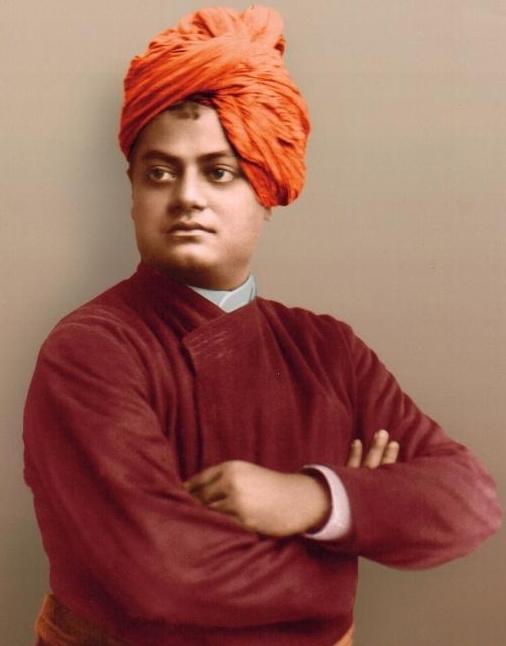 "Education is not the amount of information that put into your brain and remains there, undigested, all your life. We must have life building, man-making, character building, assimilating fine ideas and making them your life and character, you have more education than any man who has got by heart a whole library.” SWAMI VIVEKANAND
Subscribe to:
Posts (Atom)